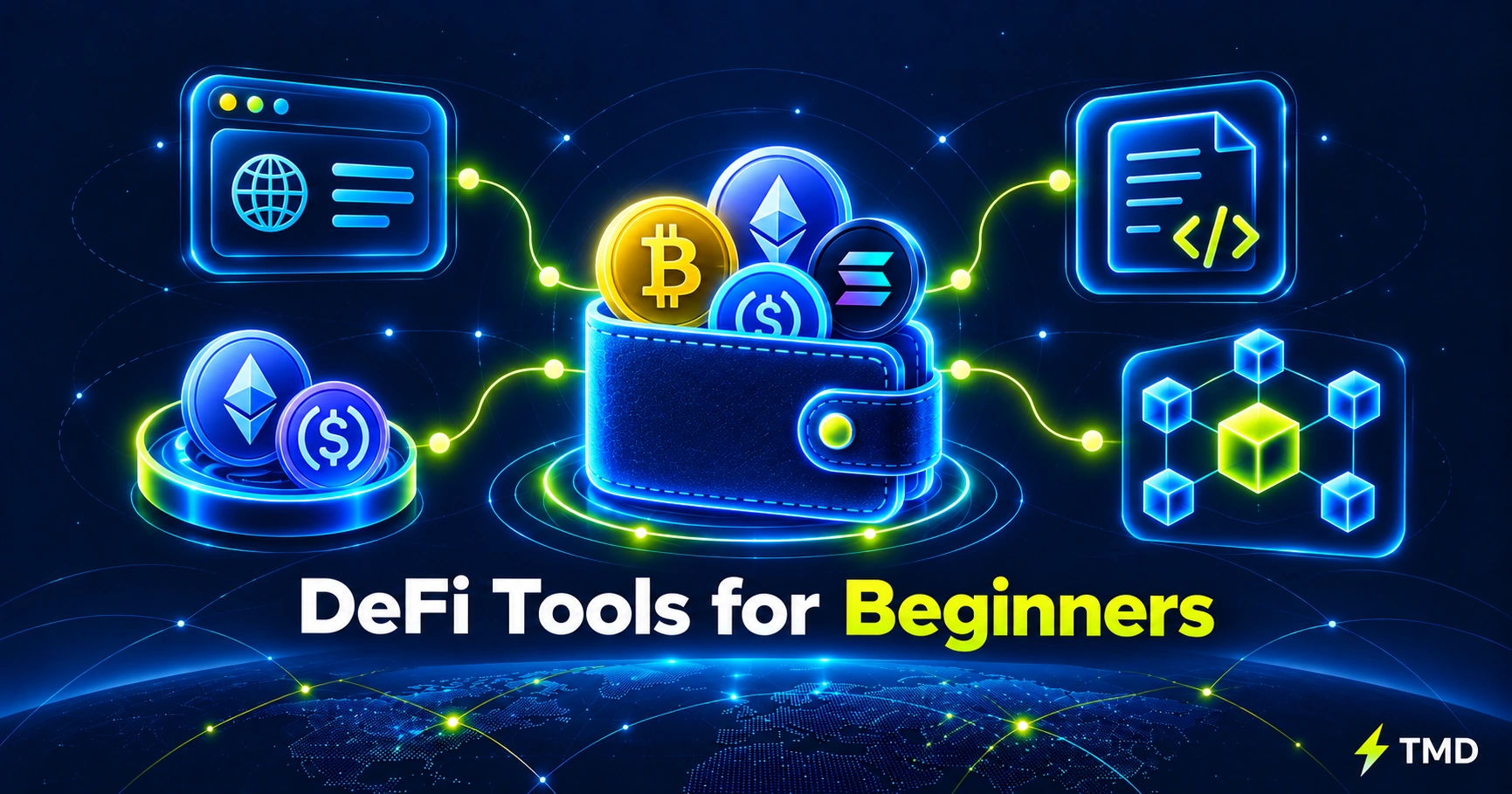
LEARN DEFI, DAPPS & ON-CHAIN TOOLS.
DeFi tools
for Beginners
Learn how DeFi tools work, how wallets connect to decentralised apps, and how smart contracts, gas fees, transactions, and on-chain platforms fit together.
The Meta Directory’s DeFi guides help beginners understand decentralised finance, dApps, smart contracts, wallet interactions, transaction costs, and the risks to check before using on-chain tools.
New to decentralised finance? Start with these guides to understand DeFi, dApps, smart contracts, crypto wallets, gas fees, and the key concepts beginners should know before using on-chain tools.
TIP: Start with the DeFi Beginner Guide, then continue with dApps and Smart Contracts Explained before connecting a wallet to an on-chain platform.
What Are DeFi Tools?
DeFi tools are blockchain-based apps and services that let users interact with decentralised finance. They can support activities such as swapping crypto, lending, borrowing, staking, providing liquidity, moving assets between networks, and managing on-chain positions.
Most DeFi tools are accessed through a crypto wallet and use smart contracts to process transactions. Instead of relying entirely on a traditional financial intermediary, users interact with blockchain-based protocols and take more responsibility for wallet security, transaction approvals, fees, and platform risks.
Quick Answer
DeFi tools are apps, protocols, and services built for decentralised finance. They commonly use crypto wallets, dApps, smart contracts, and blockchain transactions to provide financial functions without relying on a traditional bank or brokerage.
Learn DeFi Step-By-Step
Use this beginner learning path to understand what DeFi is, how wallets connect to decentralised apps, how smart contracts process on-chain activity, and which security risks matter before using DeFi tools.
STEP 1

DeFi Foundations
Start with the core concepts behind DeFi, liquidity pools, dApps, smart contracts, and blockchain transactions.
→ DeFi Beginner Guide
→ Liquidity Pools Explained
→ dApps Explained
→ Smart Contracts Explained
→ Gas Fees Explained
STEP 2
Wallets & Transactions
Learn how crypto wallets connect to DeFi apps, how private keys and seed phrases affect wallet control, and why transaction fees and approvals matter.
→ Crypto Wallet Guide
→ Private Keys and Seed Phrases
→ Gas Fees Explained
→ Crypto Wallet Safety Guide
STEP 3

DeFi Safety
Understand wallet security, custody, scam risks, and the responsibilities that come with connecting a wallet to decentralised apps.
→ Crypto Wallet Safety Guide
→ Common Crypto Scams
→ Custodial vs Non-Custodial Wallets
→ Private Keys and Seed Phrases

DEFI LEARNING PATH
How DeFi Tools Work Together
DeFi tools usually work as part of a connected on-chain process. A user connects a crypto wallet to a decentralised app, interacts with smart contracts, approves transactions, and pays any applicable network fees.
Crypto Wallet
Used to connect to DeFi apps, sign transactions, and manage access to digital assets.
CRYPTO WALLET GUIDE →

dApp
Provides the interface for DeFi services such as swapping, lending, borrowing, or staking.
DAPPS EXPLAINED →

Smart Contract
Executes the rules behind many DeFi transactions, such as swaps, deposits, withdrawals, and token transfers.
SMART CONTRACTS EXPLAINED →

DEX
Allows users to swap crypto through decentralised exchange systems that may use wallets, smart contracts, liquidity pools, and AMMs.

Liquidity Pool
Supplies pooled assets that many AMM-based DEXs and DeFi protocols use for swaps, liquidity, and on-chain activity.
Transaction & Gas Fee
Processes the requested blockchain action and may require a network fee before it can be completed.
GAS FEES EXPLAINED →
DeFi Safety & Risks
DeFi gives users more direct control over wallets and on-chain activity, but that also means more responsibility for security. Before using DeFi tools, beginners should understand wallet risks, scams, transaction approvals, private-key security, and the possibility of losing funds through mistakes or unsafe platforms.
DeFi Tools & Platform Reviews Coming Soon
The Meta Directory is building researched reviews and comparisons of DeFi tools, protocols, and on-chain platforms. These will look at factors such as security, transparency, wallet requirements, fees, supported networks, usability, risks, and beginner suitability.
Until those reviews are live, use the guides on this page to understand how DeFi works, how wallets interact with dApps and smart contracts, and which risks to check before using an on-chain platform.
MOST POPULAR CRYPTO GUIDES
These are the most searched and most useful crypto guides for beginners — designed to help you get started quickly and safely.
Latest DeFi Guides
Explore the latest guides from The Meta Directory covering decentralised finance, dApps, smart contracts, gas fees, wallets, on-chain transactions, and DeFi safety.
-

What Are Liquidity Pools? A Beginner’s Guide to DeFi Liquidity
Learn what liquidity pools are, how they work in DeFi, and what beginners should know about liquidity providers, AMMs, fees and risks.
-
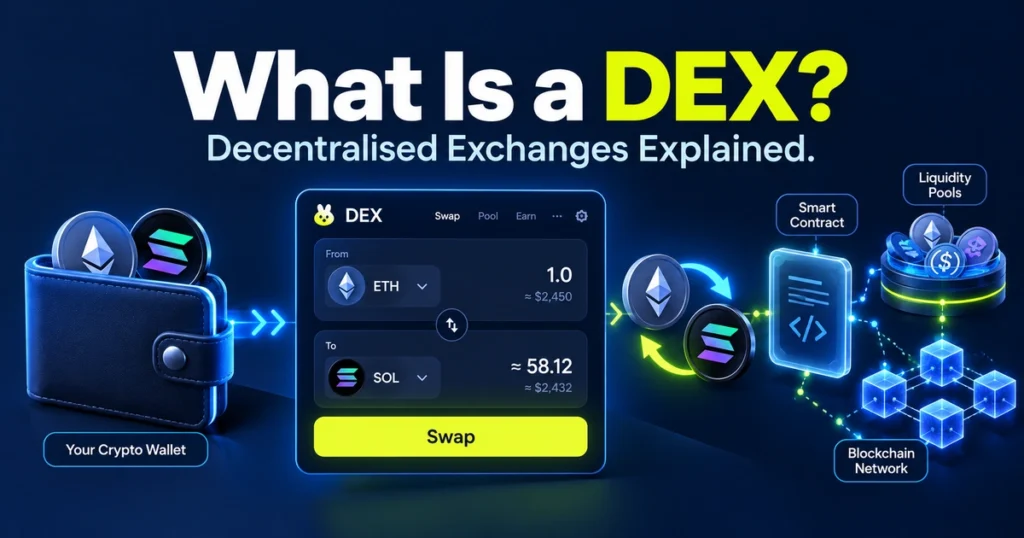
What Is a DEX? A Beginner’s Guide to Decentralised Exchanges
Learn what a DEX is, how decentralised exchanges work, and what beginners should know about wallets, fees, liquidity and risks.
-

What Are Smart Contracts? A Beginner’s Guide to Blockchain-Based Agreements
Learn what smart contracts are, how they work on blockchain networks, where they’re used across Web3 and DeFi, and what beginners should understand before approving smart contract interactions.
Continue Learning: Wallets, Web3 & Crypto
Once you understand the basics of DeFi, the next step is strengthening your knowledge of wallets, Web3, and the crypto concepts that support on-chain activity. These guides help explain the broader ecosystem DeFi tools operate within.
- Crypto Wallet Guide →
- Web3 Beginner Guide →
- DeFi Beginner Guide →
- Crypto Explained →
- Blockchain Explained →
Helpful DEFI Resources
These independent resources provide additional information about decentralised finance, DeFi risks, smart-contract-based financial activity, and global policy approaches alongside The Meta Directory’s beginner DeFi guides.
Learn DeFi Terminology
Quick Glossary
New to DeFi? These are some of the key terms you’ll see when using decentralised apps, smart contracts, wallets, and on-chain financial tools.
POPULAR:
DeFi
+Blockchain-based decentralised financial apps and protocols that can provide services such as trading, lending, borrowing, or staking without relying entirely on traditional financial intermediaries.
dApp
+A decentralised application, or dApp, is an app that uses blockchain networks and smart contracts to provide features or services. Many DeFi tools are accessed through dApps.
SMART CONTRACT
+A smart contract is blockchain-based code that automatically carries out predefined rules or actions. DeFi protocols use smart contracts to process activities such as swaps, deposits, loans, and withdrawals.
DEX
+A decentralised exchange, or DEX, is an on-chain platform that allows users to swap crypto assets through smart contracts, often by connecting a crypto wallet rather than creating a traditional exchange account.
Liquidity Pool
+A liquidity pool is a collection of crypto assets supplied to a DeFi protocol to support activities such as token swaps, lending, or borrowing. Users who supply assets may receive fees or other incentives, but risks can apply.
COMMON QUESTIONS
These FAQs answer common beginner questions about DeFi tools, dApps, smart contracts, wallets, gas fees, and the risks involved in using decentralised finance.
DeFi tools are used for blockchain-based financial activities such as swapping crypto, lending, borrowing, staking, providing liquidity, and managing digital assets through decentralised apps and smart contracts.
In most cases, yes. A crypto wallet is commonly used to connect to DeFi apps, sign transactions, manage digital assets, and approve interactions with smart contracts.
DeFi refers to blockchain-based financial services and protocols, while a dApp is a decentralised application that provides an interface for blockchain-based features. Many DeFi services are accessed through dApps.
DeFi tools can involve significant risks, including smart-contract vulnerabilities, scams, malicious wallet approvals, transaction mistakes, volatile assets, and platforms with limited support or protections. Beginners should understand wallet safety before connecting a wallet or approving transactions.
Many DeFi transactions require a blockchain network to process an action, such as a token swap, deposit, withdrawal, or smart-contract interaction. Gas fees help pay for that network processing and can change depending on demand and transaction complexity.
Before using a DeFi platform, check how it works, which network it uses, what wallet permissions it requests, the fees involved, security information, smart-contract risks, platform transparency, and whether you understand how to withdraw or recover your assets.
HOW WE REVIEW & RANK
The Meta Directory researches crypto, Web3, AI, and emerging technology platforms using a consistent editorial framework. We look at security signals, transparency, usability, fees, risks, reputation, availability, and beginner suitability.
HOW WE REVIEWSTAY UPDATED
Get new crypto guides, updated rankings, and practical tips straight to your inbox — no spam, unsubscribe anytime.
NO SPAM. UNSUBSCRIBE ANYTIME.