What Are dApps? A Beginner’s Guide to Decentralised Apps
Updated: September 2026
Written By
Table of Contents
- Understand The Fundamentals Of dApps
- What Does dApp Mean?
- How Do dApps Work?
- Traditional Apps vs dApps
- What Are dApps Used For?
- Do You Need a Crypto Wallet to Use dApps?
- What Do You Need Before Using dApps?
- Before You Start Checklist
- Are dApps Safe?
- Pros and Cons of dApps
- Beginner dApp Terms to Know
- How Beginners Should Start Learning dApps
- Key Takeaways
- Where to Go Next
- Frequently Asked Questions
QUICK FACTS
Best for:
Beginners
Difficulty: Beginner-friendly
Main topic:
Decentralised apps (dApps)
Covers:
Web3, wallets, blockchain, DeFi, dApp risks
You’ll learn:
What dApps are, how they work, where they are used, and what to check before using one

What are dApps? dApps are decentralised applications. They are apps that use blockchain technology, smart contracts, wallets, or tokens in some part of how they work.
A dApp may look like a normal website or mobile app, but the way you interact with it can be different. Instead of only logging in with an email address and password, you may connect a crypto wallet, approve transactions, or interact with blockchain-based tools.
The easiest way to think about it is this:
A dApp is an app connected to blockchain technology, often through wallets, smart contracts, or digital assets.
Some dApps are used for DeFi, NFTs, gaming, DAOs, marketplaces, or Web3 communities. However, not every dApp is useful, safe, or fully decentralised.
This beginner guide explains what dApps are, how they connect to Web3, crypto wallets, blockchain networks, and DeFi, and what risks beginners should understand before using one.
dApps form an important part of the wider Web3 and crypto ecosystem, connecting blockchain networks with wallets, smart contracts, digital assets and user-facing applications.
Understand The Fundamentals Of dApps
Before using wallet-connected apps, DeFi tools, NFT marketplaces, or blockchain games, it helps to understand what dApps are designed to do.
A decentralised app is not always completely decentralised. Some dApps use normal websites, company teams, or standard front-end designs, while the blockchain part may handle transactions, ownership records, tokens, or smart contract actions.
This section gives you a simple dApps explained overview without making the topic too technical.
What Does dApp Mean?
Quick Answer
A dApp, or decentralised application, is an app that uses blockchain-based technology such as smart contracts, wallet connections or on-chain records as part of how it works. It may look like a normal website or app even though some of its underlying activity takes place on a blockchain.
dApps can operate across different blockchain networks. Ethereum is one prominent example, but decentralised applications are not limited to Ethereum.
Ethereum’s technical dApp documentation describes an Ethereum dApp as combining a smart contract with a front-end user interface, showing how blockchain-based logic can sit behind an application that looks familiar to the user.
Some dApps are built around digital assets. Others support trading, lending, borrowing, gaming, voting, community tools, or NFT ownership. A dApp may use a crypto wallet instead of a normal account login, or it may use tokens to represent access, ownership, or participation.
dApps are closely connected to Web3 because web3 brings together blockchain-based applications, wallet access, digital assets and forms of digital ownership.
For beginners, the key point is this: a dApp is not automatically better than a normal app. It’s just built differently, usually with blockchain tools involved somewhere behind the scenes.
How Do dApps Work?
A dApp usually works by connecting a user, a wallet, an app interface, and a blockchain network.
A simple version looks like this:
User → Crypto wallet → dApp → Smart contract → Blockchain network
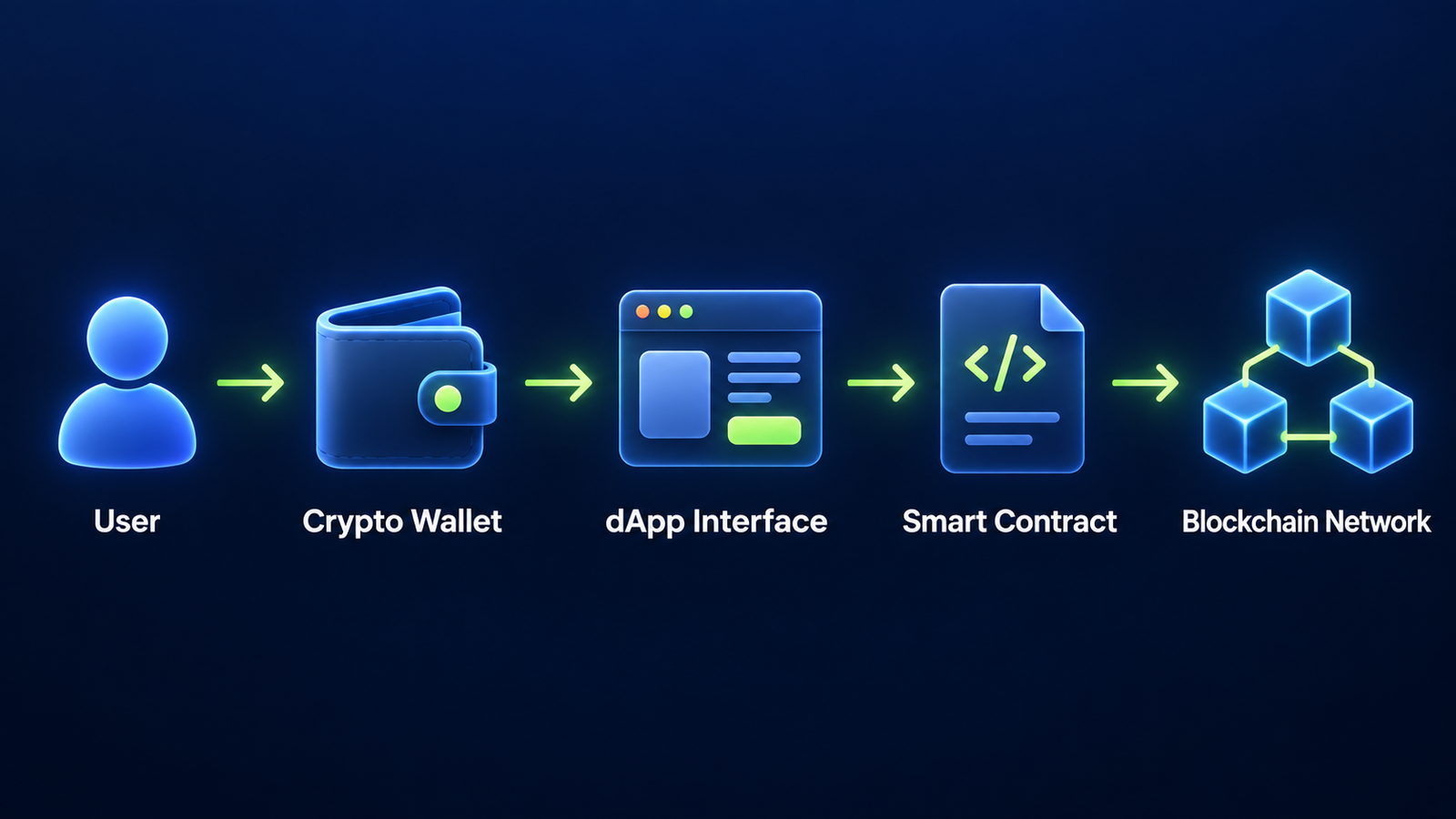
For example, you may open a DeFi app, connect a wallet, choose an action, review a wallet approval, and confirm a transaction. If approved, the action may be sent to a blockchain network and recorded.
Not every dApp works the same way. Some only use blockchain for a small part of the experience. Others rely more heavily on smart contracts, wallet approvals, tokens, and public transaction records.
Blockchain networks provide the shared infrastructure that records transactions and state changes generated by many dApps, helping explain why these applications can behave differently from conventional websites.
Traditional Apps vs dApps
Traditional apps usually run through company-controlled servers, user accounts, and private databases. A social media app, banking app, shopping app, or streaming platform may control the login system, user data, payment process, and account rules.
dApps often work differently. They may use blockchain networks, smart contracts, wallet connections, or tokens. This can give users new ways to interact with digital assets, but it can also create new risks.
| Feature | Traditional app | dApp |
| Main system | Company-controlled servers | Blockchain networks, smart contracts, or hybrid systems |
| Login | Email, password, social login | Often a crypto wallet or wallet address |
| Ownership | Usually controlled by the platform | May include user-owned tokens, NFTs, or digital assets |
| Payments | Cards, banks, subscriptions, in-app payments | Crypto, tokens, stablecoins, or wallet transactions |
| Changes | Platform can usually update or control the app | Some rules may be controlled by smart contracts or governance |
| Main risks | Data privacy, account restrictions, platform control | Wallet approvals, scams, fees, smart contract risk |
A dApp can still have a website, a team, a brand, and a normal-looking interface. The difference is that some important actions may happen through blockchain-based systems rather than only through a company’s private database.
What Are dApps Used For?
dApps can be used for many different purposes. Beginners don’t need to understand every category at once, but the main examples are useful to know.
DeFi Apps
DeFi apps are decentralised finance apps. They let you swap tokens, lend, borrow, stake, provide liquidity, or use other blockchain-based financial tools.
These apps can be useful, but they can also be risky. DeFi may involve smart contracts, volatile assets, changing yields, liquidity risk, and wallet approvals.
Decentralised finance (DeFi) is one of the largest categories of dApps, using blockchain networks and smart contracts for activities such as token swaps, lending and borrowing.
DeFi tools can include decentralised exchanges, lending protocols and liquidity applications designed for different types of blockchain-based financial activity.
NFT Marketplaces
NFT marketplaces are dApps where users may create, buy, sell or view NFTs and other digital assets. These assets can represent ownership, access, membership, art, collectibles, gaming items or other digital records.
Not every NFT has long-term value. Beginners should be careful with fake collections, copied projects, phishing links, and hype-driven purchases.
Blockchain Games
Some games use tokens, NFTs, wallets, or blockchain records. These features may let players trade items, own certain in-game assets, or participate in a game economy.
However, blockchain games can carry risk. A project may fail, tokens may lose value, gameplay may be poor, or users may be targeted by fake links and scam communities.
DAO Tools
DAOs are blockchain-connected communities or organisations that may use tokens and voting systems to coordinate decisions.
Some dApps support proposals, treasury management, voting, or community governance. Beginners do not need to use DAO tools early, but they are part of the wider Web3 ecosystem.
Do You Need a Crypto Wallet to Use dApps?
Many dApps require a crypto wallet, especially if the app involves tokens, NFTs, DeFi, or blockchain transactions.
A wallet can act like a login tool for Web3 apps. Instead of entering an email and password, a user may connect a wallet and sign a message. In some cases, signing a message proves wallet ownership without spending funds. In other cases, the wallet may ask the user to approve a transaction.
A wallet connection does not always mean money is being spent, but beginners should still pay attention. Some approvals can give an app permission to interact with tokens or assets.
A crypto wallet provides the connection and signing tools that many dApps use for account access, transaction approval and interactions with digital assets.
Many wallet-connected dApps can be used with non-custodial wallets, where the user controls the relevant keys and takes responsibility for reviewing the actions they approve.
What Do You Need Before Using dApps?
Before using dApps, beginners should understand the basics of Web3, wallets, blockchain networks, transaction approvals, and risk.
It helps to know:
- What the app is used for
- Which blockchain network it uses
- Why it wants a wallet connection
- What action the wallet is asking you to approve
- Whether gas fees apply
- Whether the website URL is correct
- Whether the project has a real track record
- Whether the app is being promoted through pressure or hype
- How much you could afford to lose if something goes wrong
Some dApp actions create on-chain transactions, so gas fees or other network fees may appear before the user approves an action.
Author’s Tip
dApps are easier to understand when you think of them as familiar-looking apps with blockchain features underneath. The important question is not only what the app does, but what your wallet is being asked to approve.
Before You Start Checklist
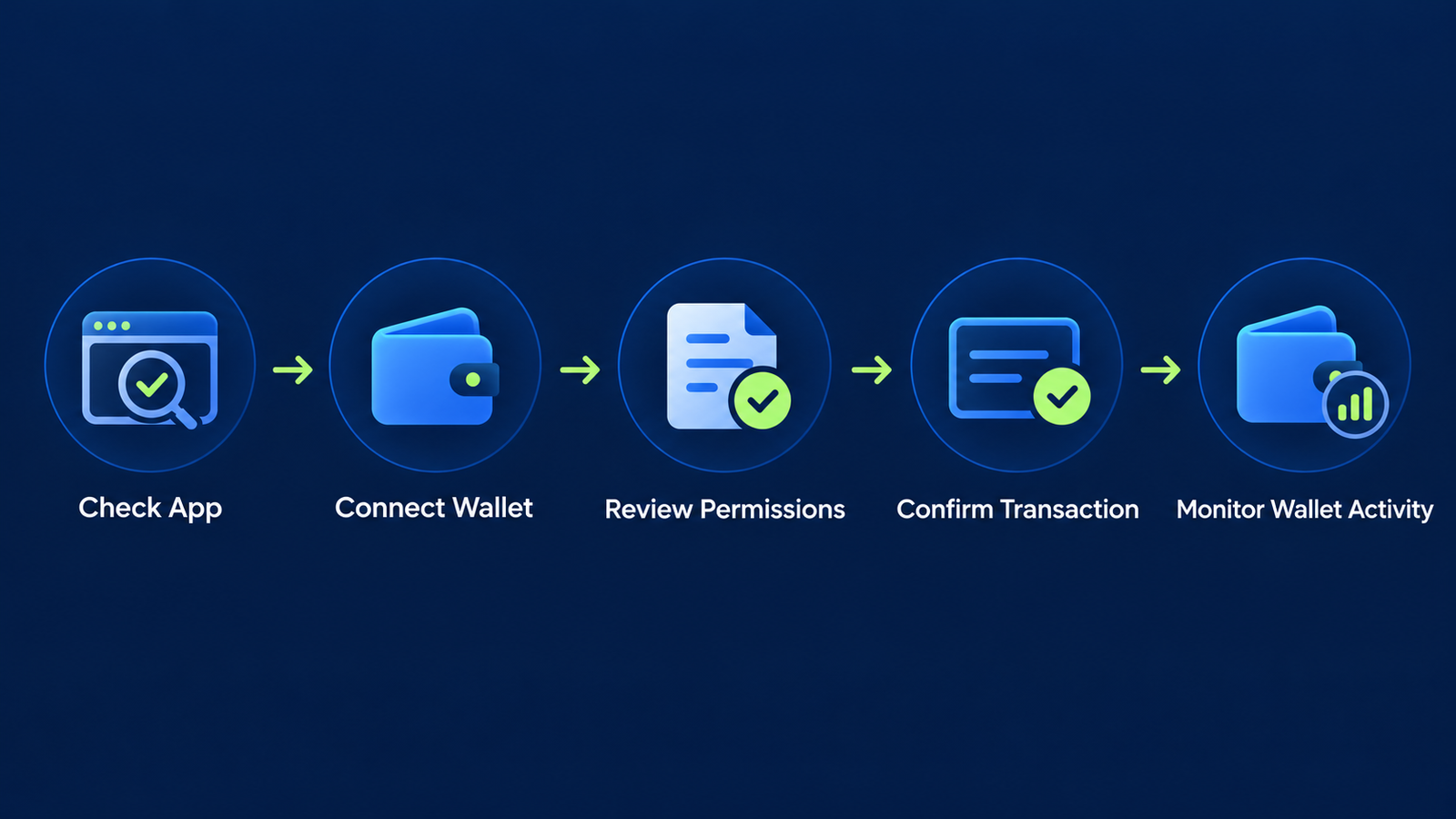
Before using a dApp, make sure you can answer these questions:
- Do I understand what the app is used for?
- Do I know which blockchain network it uses?
- Do I understand why it is asking me to connect a wallet?
- Do I know what permissions I am approving?
- Have I checked that the website URL is correct?
- Do I understand whether gas fees apply?
- Have I checked whether the app is legitimate?
- Am I avoiding links from DMs, ads, or social media comments?
- Am I starting small enough that a mistake would not cause serious financial harm?
If the answer is no to any of these, spend more time learning before connecting a wallet, approving a transaction, or moving funds.
Are dApps Safe?
dApps can be useful, but beginners should not assume a decentralised app is safe just because it uses blockchain technology. Risks can come from scams, fake websites, malicious approvals, smart contract bugs, risky tokens, unclear teams, poor security, or user mistakes.
Smart-contract vulnerabilities can create risks even when a dApp itself appears legitimate. The OWASP Smart Contract Top 10 for 2026 identifies issues including access-control flaws, business-logic vulnerabilities, oracle manipulation and reentrancy among the major security risks affecting smart contracts.
Common dApp Risks
Some dApp risks come from the app itself. Others come from the way users find, connect to, or approve actions inside the app.
Common risks include:
- Fake dApp websites
- Phishing links
- Wallet-draining scams
- Malicious transaction approvals
- Unsafe smart contracts
- Fake NFT collections
- Risky DeFi platforms
- Low-quality blockchain games
- Copied app interfaces
- Seed phrase theft
- High or unexpected gas fees
- Project failure
Common crypto scams affecting dApp users can include phishing sites, copied interfaces, malicious wallet requests, fake tokens and fraudulent NFT or DeFi promotions.
Beginner Safety Note
dApps can involve wallet connections, token approvals, smart contracts, and blockchain transactions. Before using any decentralised app, make sure you understand wallet safety, transaction approvals, scams, and platform risk.
Good crypto wallet safety becomes especially important with dApps because users may be asked to connect wallets, sign messages, approve token access or submit blockchain transactions.
Private keys and seed phrases should never be entered into an unfamiliar dApp, support chat or website because these credentials can provide control over wallet access.
Pros and Cons of dApps
dApps can create new ways to use digital assets, apps, and online communities, but they also add extra responsibility for users.
| Pros | Cons |
| Can give users more direct control over digital assets | Wallet mistakes can be hard or impossible to reverse |
| Can support Web3 tools, DeFi, NFTs, games, and DAOs | Fake apps and phishing links are common |
| May reduce reliance on one central platform in some use cases | Some dApps are technical for beginners |
| Can allow wallet-based access instead of traditional accounts | Gas fees and transaction approvals can be confusing |
| Can create new forms of digital ownership and participation | Smart contract bugs, low liquidity, and project failure can cause losses |
A dApp is not automatically safer, fairer, or more valuable because it uses blockchain. The quality of the app, the team, the code, the user experience, and the safety practices all matter.
Beginner dApp Terms to Know
dApps come with a lot of new terms. You do not need to memorise everything at once, but these beginner meanings can help.
| Term | Beginner meaning |
| dApp | A decentralised application that uses blockchain-based technology |
| Web3 app | Another way to describe an app connected to Web3 tools, wallets, or blockchain networks |
| Crypto wallet | A tool used to access digital assets and connect to many dApps |
| Wallet connection | When a user connects a wallet to an app or website |
| Smart contract | Code that can run on a blockchain when certain conditions are met |
| Transaction approval | A wallet request that asks the user to approve an action |
| Gas fee | A blockchain transaction fee |
| DeFi app | A dApp that offers blockchain-based financial tools |
| NFT marketplace | A platform where NFTs may be created, bought, sold, or viewed |
| DAO | A blockchain-connected community or organisation that may use voting tools |
| Phishing | A scam method that tricks users into sharing access or approving unsafe actions |
The goal isn’t to become technical immediately. The goal is to understand what each term means before connecting a wallet or approving an action.
How Beginners Should Start Learning dApps
The best way to learn dApps is to move in stages. A beginner does not need to start by connecting a wallet, buying tokens, or using DeFi.
Start with the basics:
- Learn what Web3 is.
- Understand what blockchain does.
- Learn how wallets work.
- Understand wallet connections and approvals.
- Learn what DeFi is.
- Explore dApp examples without connecting funds first.
- Learn common scam signs.
- Start small if choosing to use wallet-connected apps.
TMD’s crypto guides cover many of the foundations behind wallet-connected applications, including blockchain networks, wallets, transaction fees and security.
Key Takeaways
- dApps are decentralised apps that use blockchain-based technology in part of how they work.
- Many dApps connect to crypto wallets instead of using only email-and-password logins.
- dApps can be used for DeFi, NFTs, blockchain games, DAO tools, marketplaces, and other Web3 services.
- A dApp is not automatically safer or better than a traditional app just because it uses blockchain.
- Beginners should understand wallet connections, transaction approvals, gas fees, scams, and platform risk before using dApps.
- The safest learning path is to understand Web3, blockchain, wallets, and DeFi before connecting a wallet to an unfamiliar app.
Where to Go Next
dApps bring together blockchain networks, wallet access, smart contracts and digital assets inside applications that users can interact with directly. These guides explain the technologies behind those interactions and the risks worth understanding before connecting a wallet.
- Web3 & Crypto Guide: See how decentralised applications fit within the wider relationship between crypto, blockchain networks and wallet-connected services.
- What Is Web3?: Understand the broader internet model behind wallet access, digital ownership and blockchain-based applications.
- What Is Blockchain?: Learn how the underlying networks record the transactions and state changes generated by dApp activity.
- What Are Smart Contracts?: Understand the programs that can process dApp actions and enforce rules once a user approves a blockchain transaction.
- What Is a Crypto Wallet?: See how wallets connect users to dApps, sign messages and authorise transactions or token interactions.
- What Is DeFi?: Explore one of the largest dApp categories and how decentralised financial applications use wallets and smart contracts.
- DeFi Tools: Discover the types of financial applications users may encounter when moving from dApp concepts into practical DeFi services.
- What Are Gas Fees?: Understand why certain dApp actions create network costs and why those fees can change between transactions.
- Private Keys and Seed Phrases: Learn which wallet credentials must remain private when using applications that connect directly to digital assets.
- Crypto Wallet Safety Guide: Review the security habits involved in connecting wallets, reading requests and managing application permissions.
- Common Crypto Scams to Avoid: Recognise fake applications, phishing sites, malicious approvals and impersonation attempts targeting wallet users.
- NFT & Digital Asset Hub: Explore the digital assets and marketplace activity that power another major category of blockchain applications.
Safety Checklist
✓ Check the website URL carefully
✓ Understand why a wallet is needed
✓ Review every approval before confirming
✓ Watch for fake apps and phishing links
✓ Start small while learning



Disclaimer: This guide is for general information and education only. It is not financial, investment, legal, or tax advice. Crypto and digital assets can be risky, and prices may change quickly. Always do your own research and consider speaking with a qualified professional before making financial decisions.
The Meta Directory may earn commissions from some links, but this does not influence our editorial content.

Author
Frequently Asked Questions
dApps are decentralised apps that use blockchain-based technology, such as wallets, smart contracts, tokens, or blockchain records, in part of how they work.
dApps are often described as Web3 apps, but not every Web3 app is fully decentralised. Some apps use a mix of normal web technology and blockchain-based tools.
Most dApps use blockchain technology in some way, often through smart contracts, wallet connections, tokens, or transaction records. The level of blockchain use can vary between apps.
Many dApps require a crypto wallet because wallets are often used for login, transactions, approvals, tokens, NFTs, and digital ownership.
dApps can be risky for beginners if they do not understand wallet connections, transaction approvals, scams, gas fees, or smart contract risk. Learning first can reduce avoidable mistakes.
Examples of dApps include DeFi apps, NFT marketplaces, blockchain games, DAO tools, decentralised exchanges, and some Web3 social platforms.
Yes, many DeFi apps are dApps because they use blockchain-based tools to offer financial services such as swapping, lending, borrowing, staking, or yield products.
Yes, you can lose money using dApps through scams, bad approvals, risky tokens, smart contract bugs, fake websites, high fees, project failure, or user mistakes.
Beginners should check the website URL, wallet permissions, blockchain network, gas fees, project reputation, scam warnings, and whether the app is asking for risky approvals.
HOW WE REVIEW & RANK
We research and compare platforms using a consistent framework: security signals, track record, product usability, feature quality, transparency of terms, and real-world usefulness.
When something changes – fees, policies, availability, or features – we update our listings and reviews.
Learn more about how we review platforms ->
STAY UPDATED
Get new crypto guides, updated rankings, and practical tips straight to your inbox — no spam, unsubscribe anytime.
NO SPAM. UNSUBSCRIBE ANYTIME.